
03 — 0→1 PRODUCT — MUSICAL THEATRE APP — 2026
ShowVerse
Read it, then live it — an AI-powered growth platform that lowers the decision threshold and guides online musical fans all the way into a real theatre.
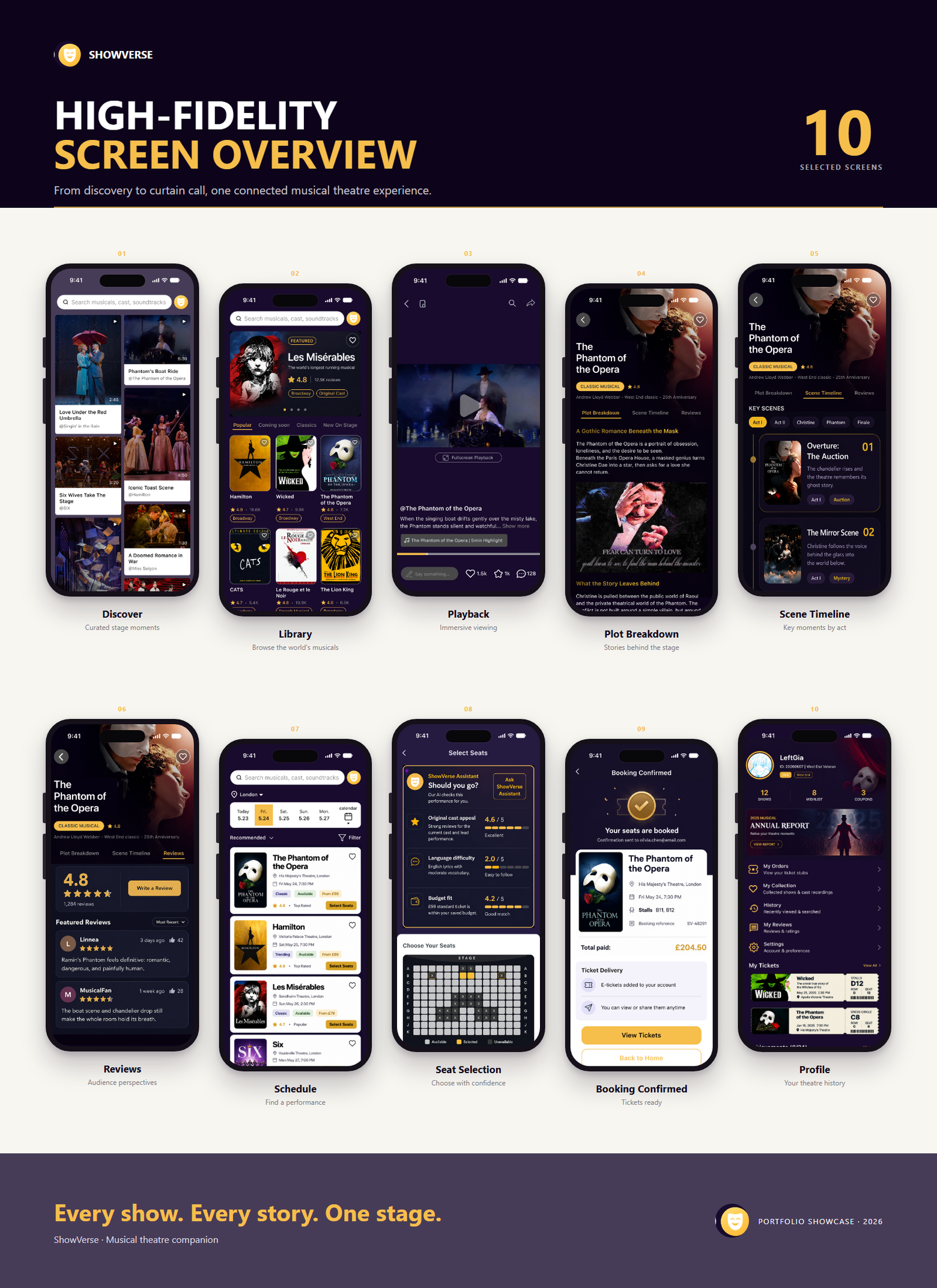
AT A GLANCE
Not another ticketing tool — an end-to-end growth platform for musical theatre fans transitioning from online clips to live performances.
01 — PROJECT ORIGIN
It started with a friend's hesitation
A friend discovered The Phantom of the Opera through a class presentation and fell in love with musical theatre — yet had never attended a live performance. She didn't know how to judge whether a show was worth seeing, and worried about ticket prices, language barriers and cast quality. My initial hypothesis was "inconvenient ticketing", so I set out to build a better ticketing platform — and launched research to test that assumption.
02 — USER RESEARCH
Testing the ticketing hypothesis
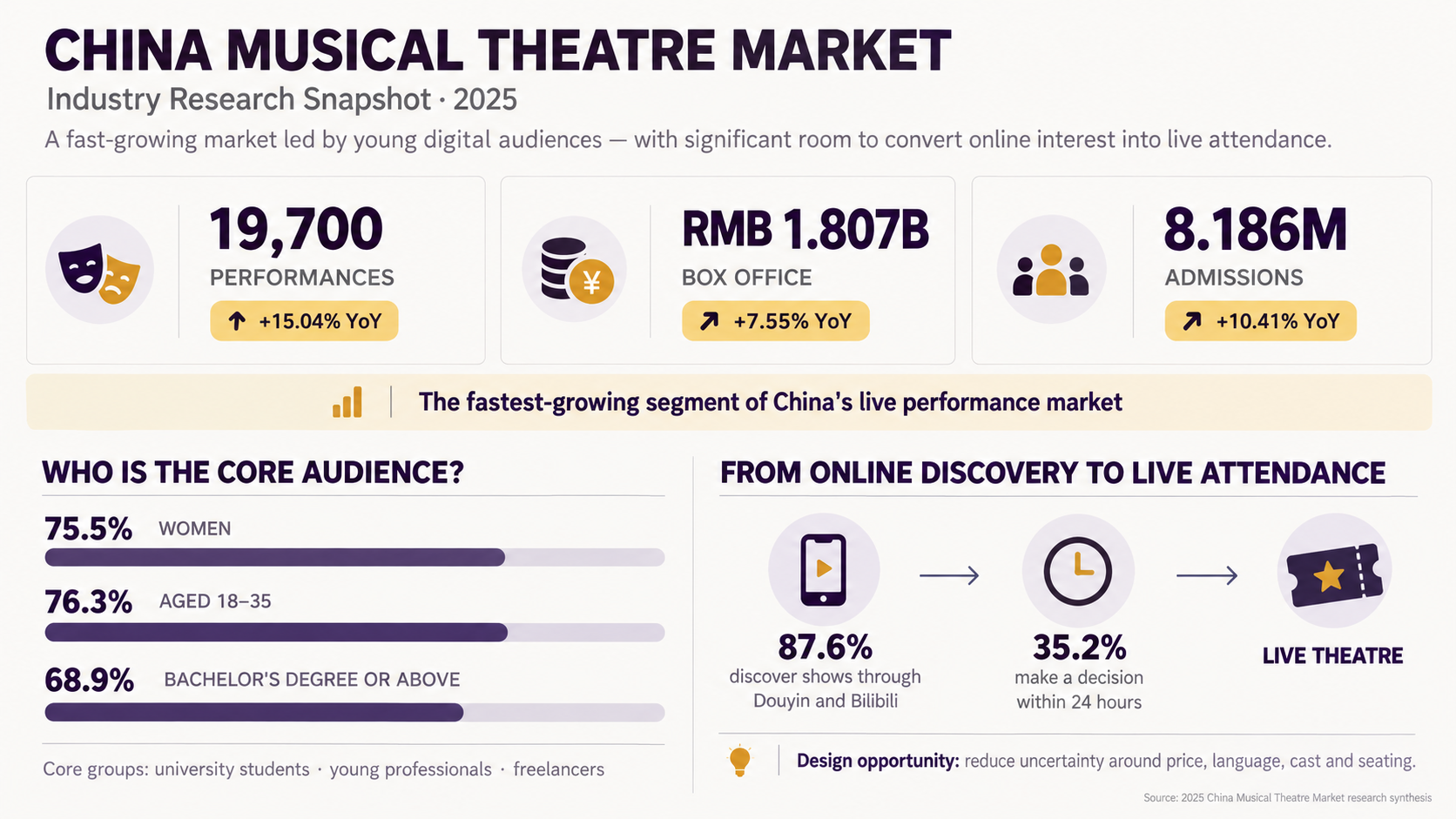
Industry research first confirmed the opportunity — China's musical theatre market is growing fast, and online viewers far outnumber live audiences. I then brainstormed ten-plus candidate features and tested them with a survey and interviews.
What 31 survey responses told us
Fragmented information ranked as the top pain point (58.1%). Fan-oriented features — merchandise, karaoke, singing tutorials — ranked lowest and were cut. In-depth interpretation and an AI decision assistant survived.
What four interviews revealed
1 — The pain is not buying tickets, but choosing the next show. After an introductory show, recommendations on mainstream platforms only surface popular content.
2 — Decision anxiety comes from information asymmetry. Language barriers, cast quality, seat views, ticket value — no neutral tool answers "is this ticket worth it".
3 — Most users are lurkers. They prefer quiet, efficient information over social interaction, fan creation or communities.
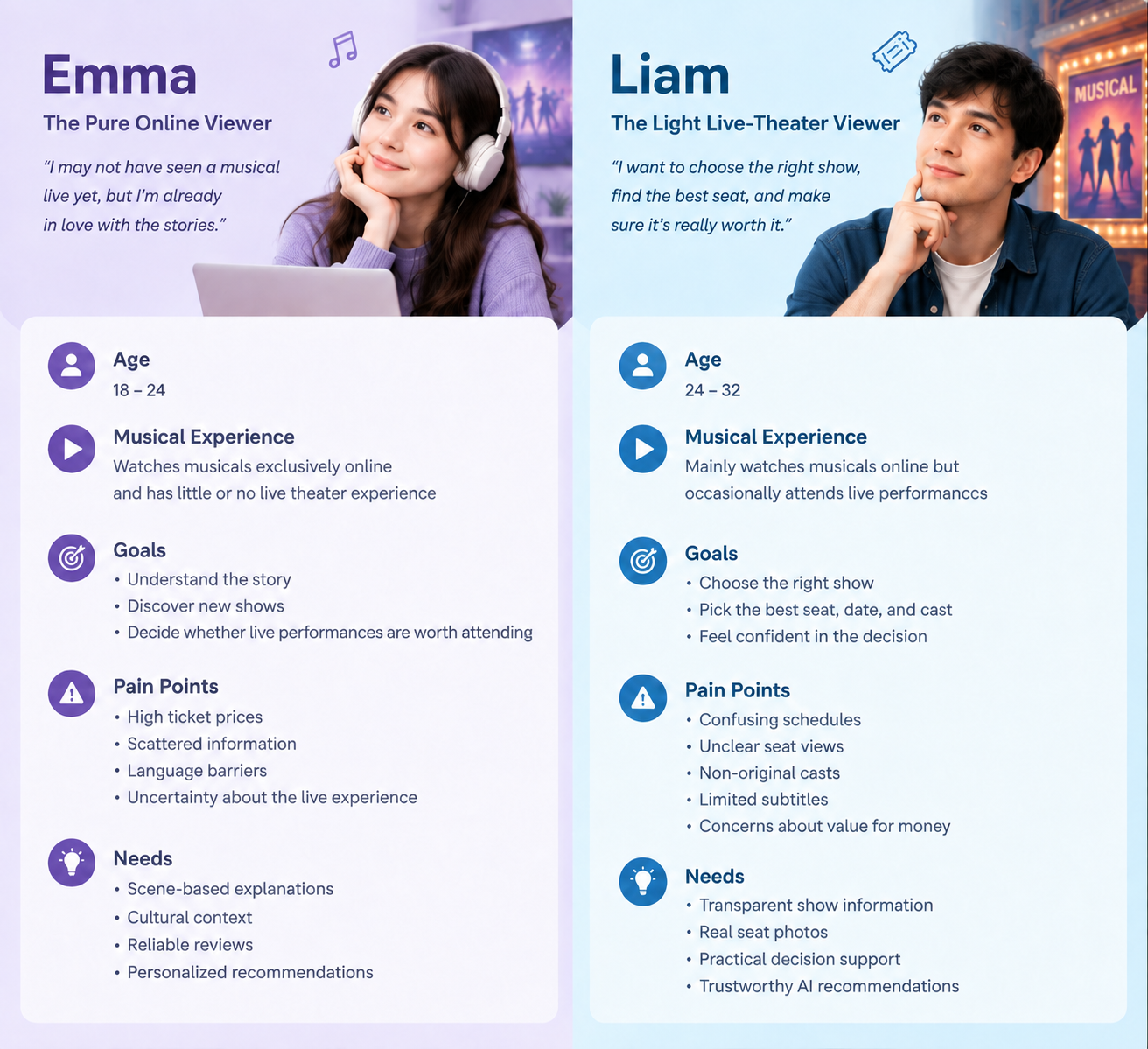
PERSONASEmma & Liam — "prospective musical fans"They encounter musicals by chance on Bilibili and short-video platforms, are moved by the stories, but don't follow celebrities, dislike fan-circle spam and rarely join communities. They have been touched by musical theatre — they just haven't stepped into a theatre yet.
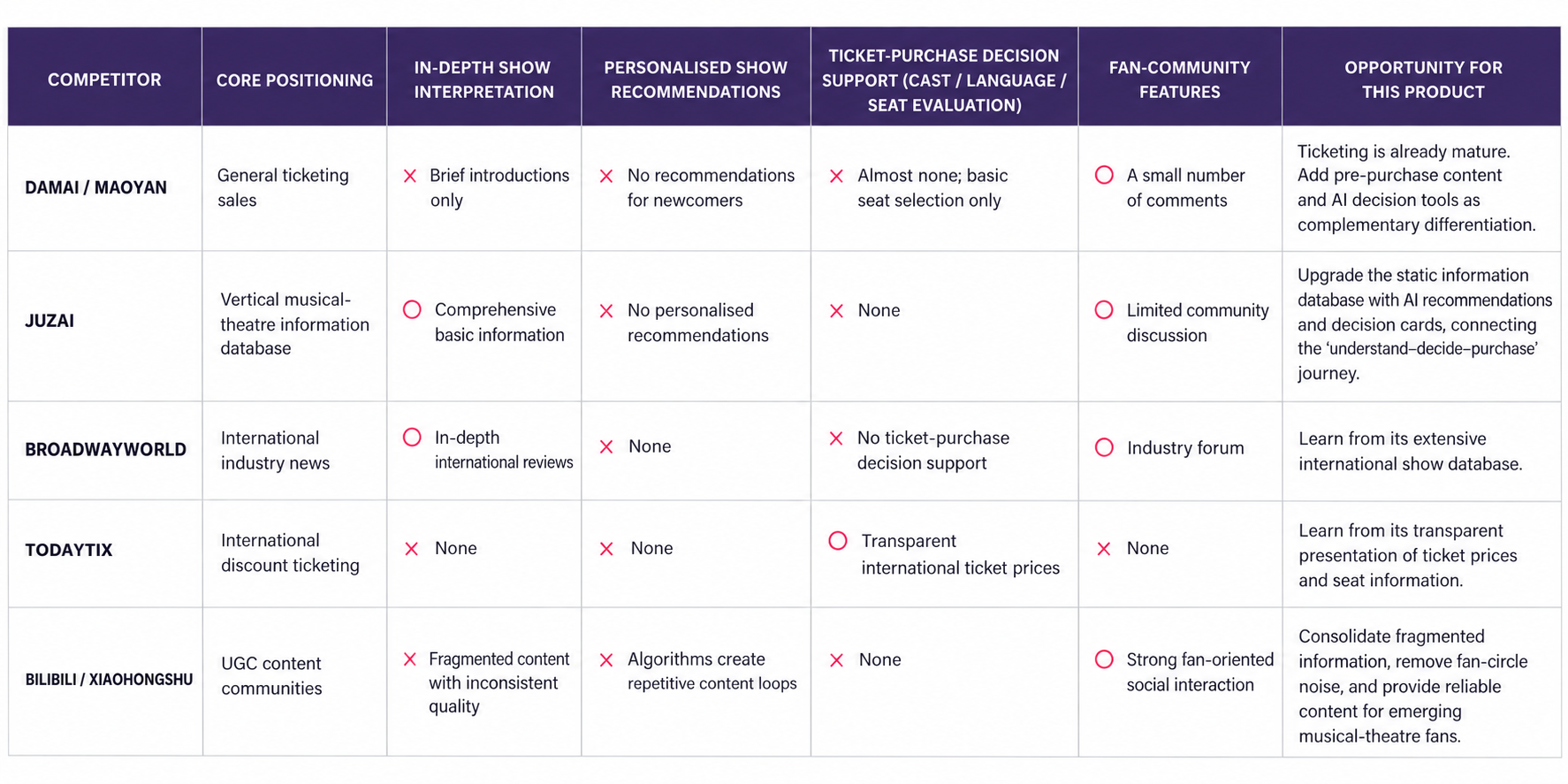
Users don't need a more convenient way to buy tickets. They need to know whether this show is actually worth seeing live.
03 — PRODUCT POSITIONING
A growth platform across four stages
04 — DESIGN PROCESS
From AI sketches to a coherent system
4.1 — AI-assisted concept prototypes
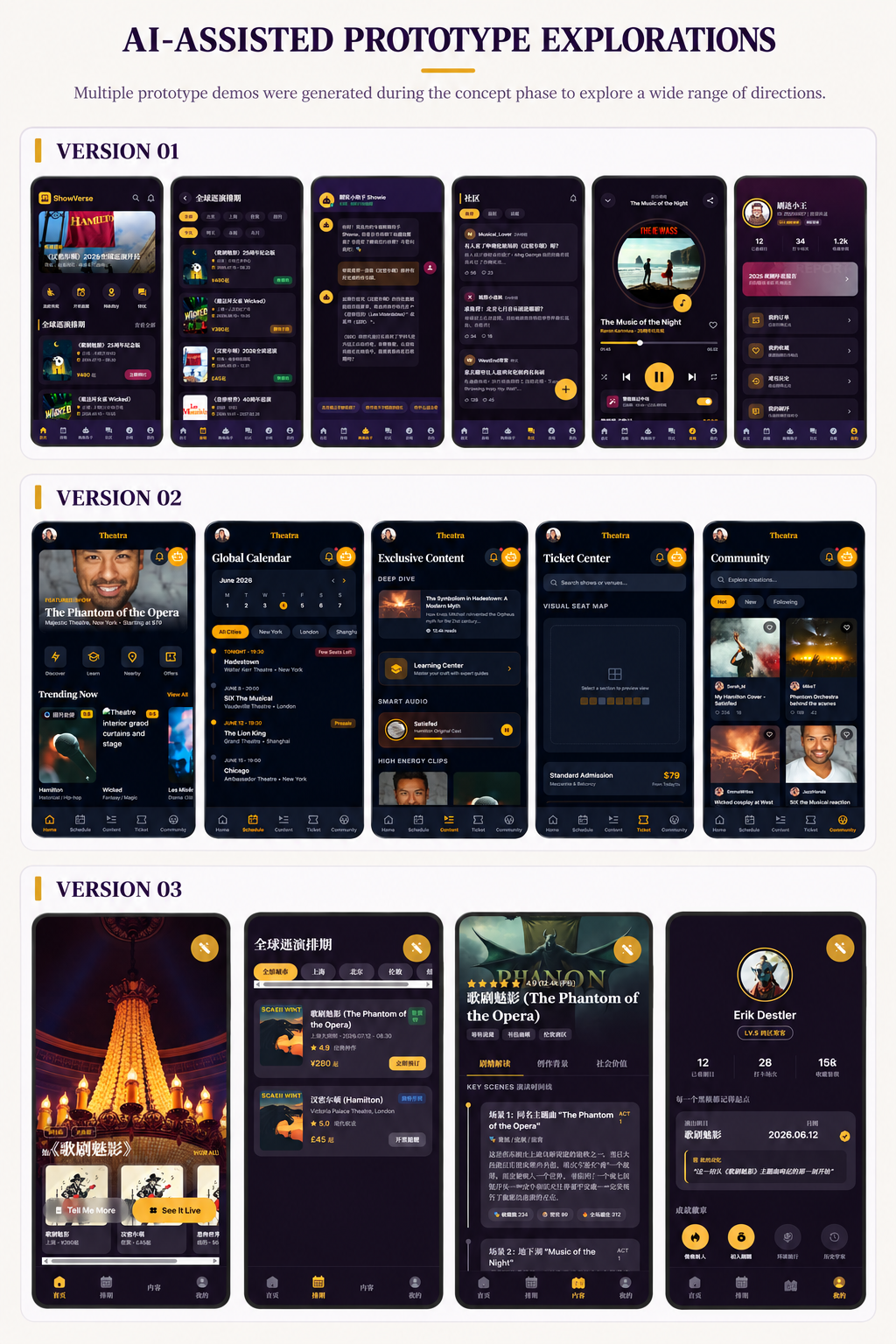
Instead of drawing refined interfaces directly, I generated multiple concept prototypes with AI to explore layouts, entries and visual directions quickly — then converged on the core theme of "theatre-going growth" and removed everything else.
4.2 — Five core task flows
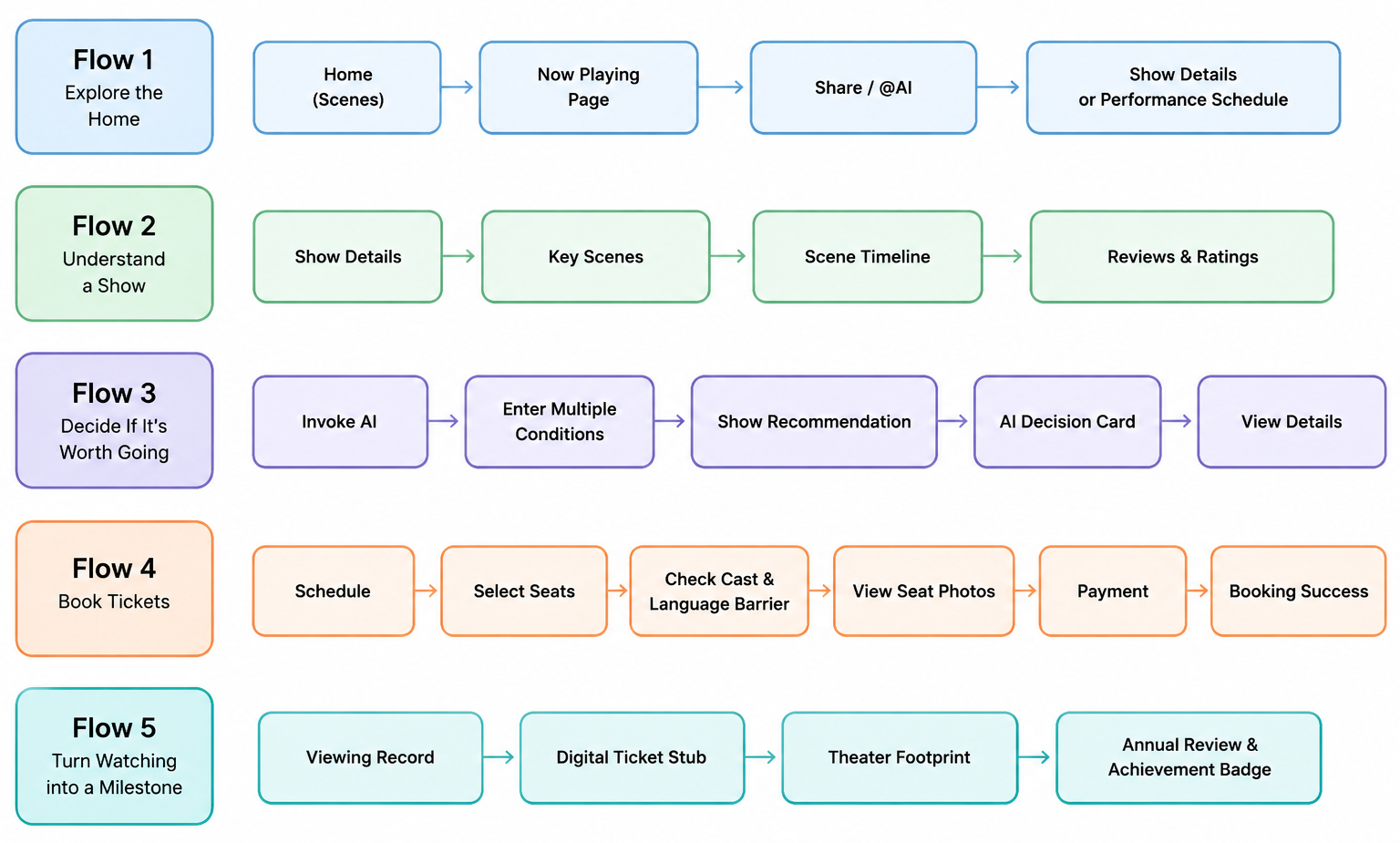
Every core behavior converges into five closed loops — discovering a clip, understanding a show, deciding with AI, attending, and keeping the memory.
4.3 — Information architecture
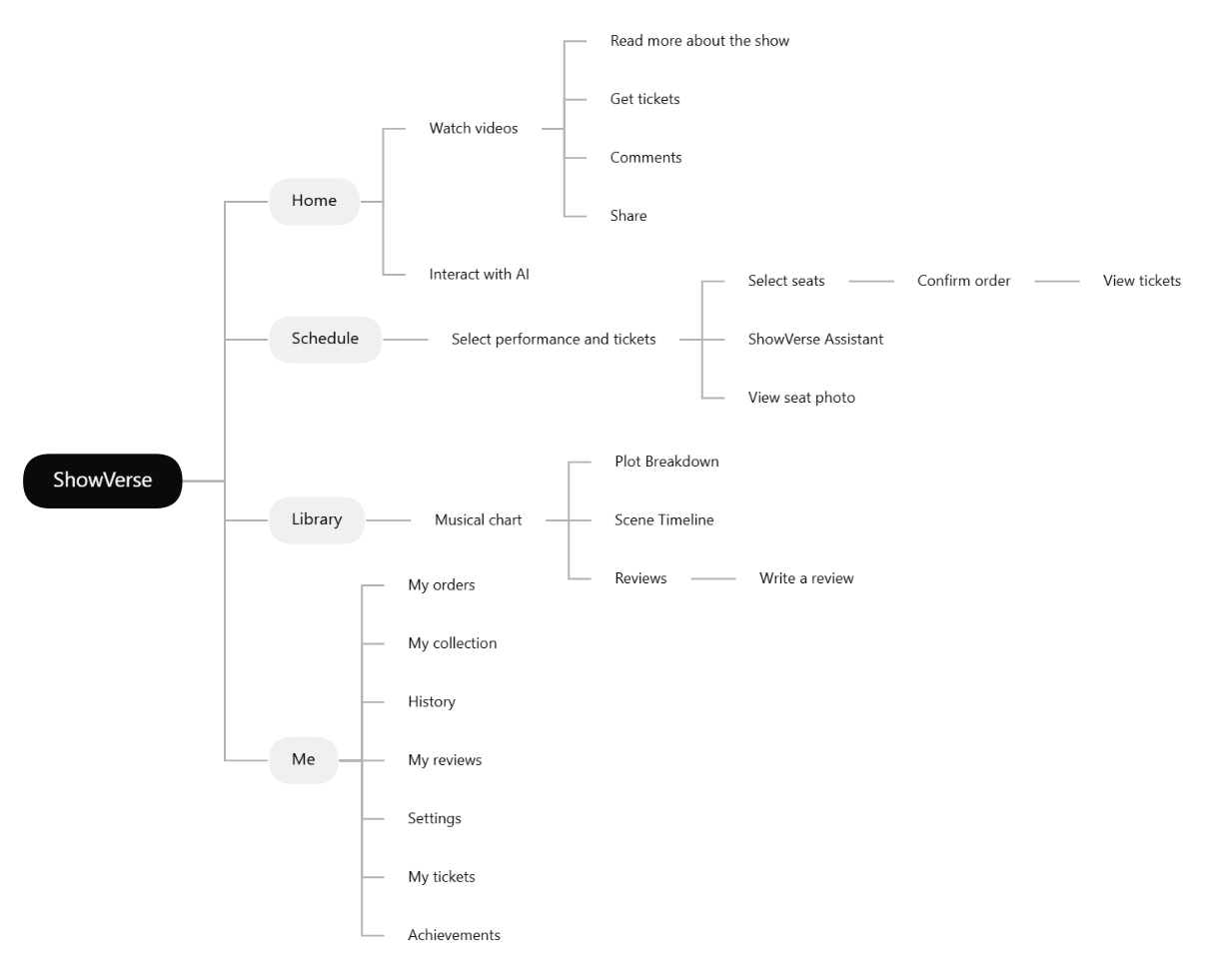
Four bottom modules — Home, Schedule, Library, Me. Every function serves the five task flows, with no extra layers, so users reach their goal in the shortest path.
4.4 — Visual style derivation
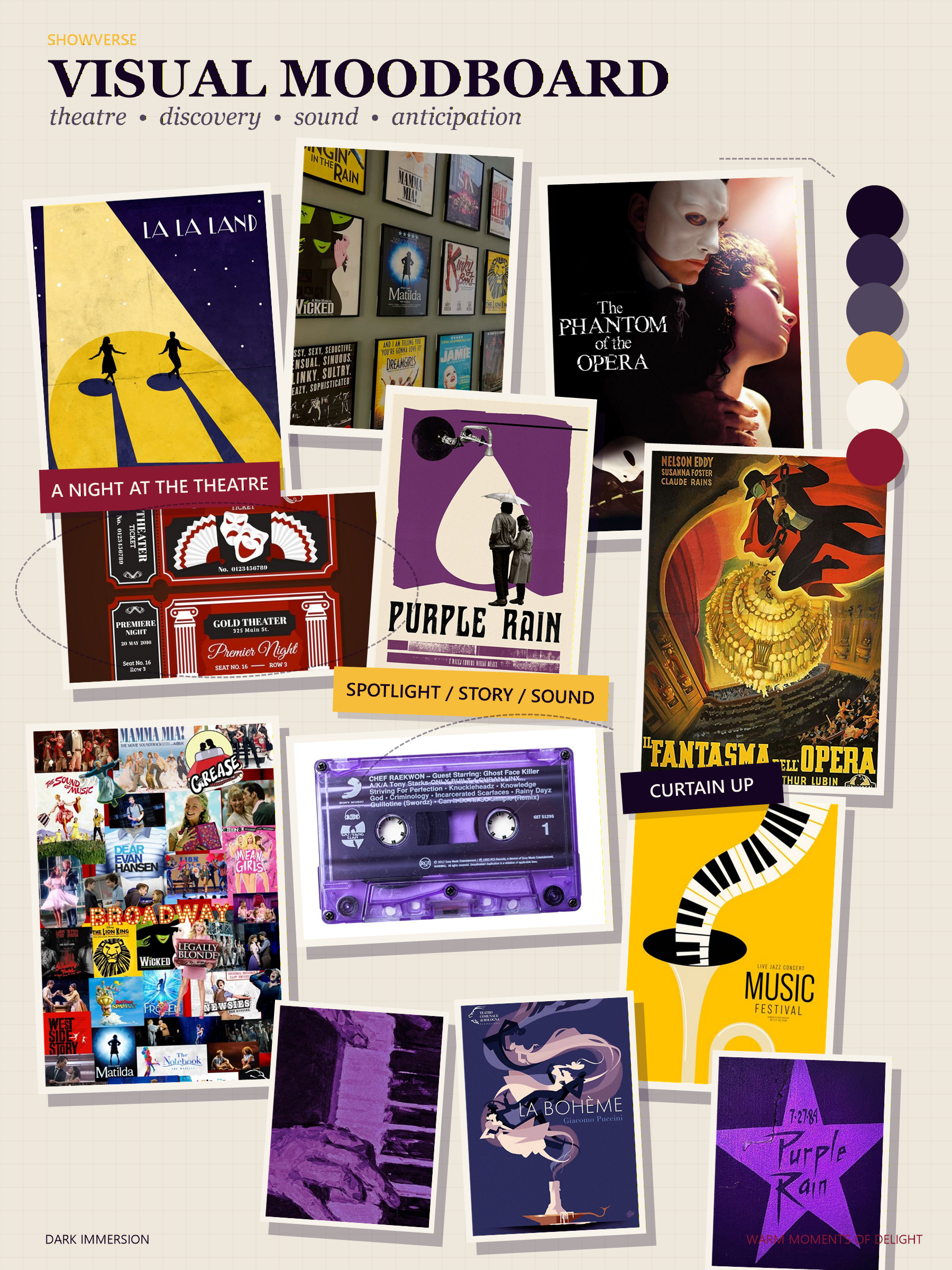
Vintage posters, old ticket stubs, spotlights, soundtrack tapes and velvet curtains. Deep purple and gold keep the classic texture of musical theatre while echoing the emotional path from discovering clips to stepping into the venue — anticipation and excitement.
4.5 — UI style guide
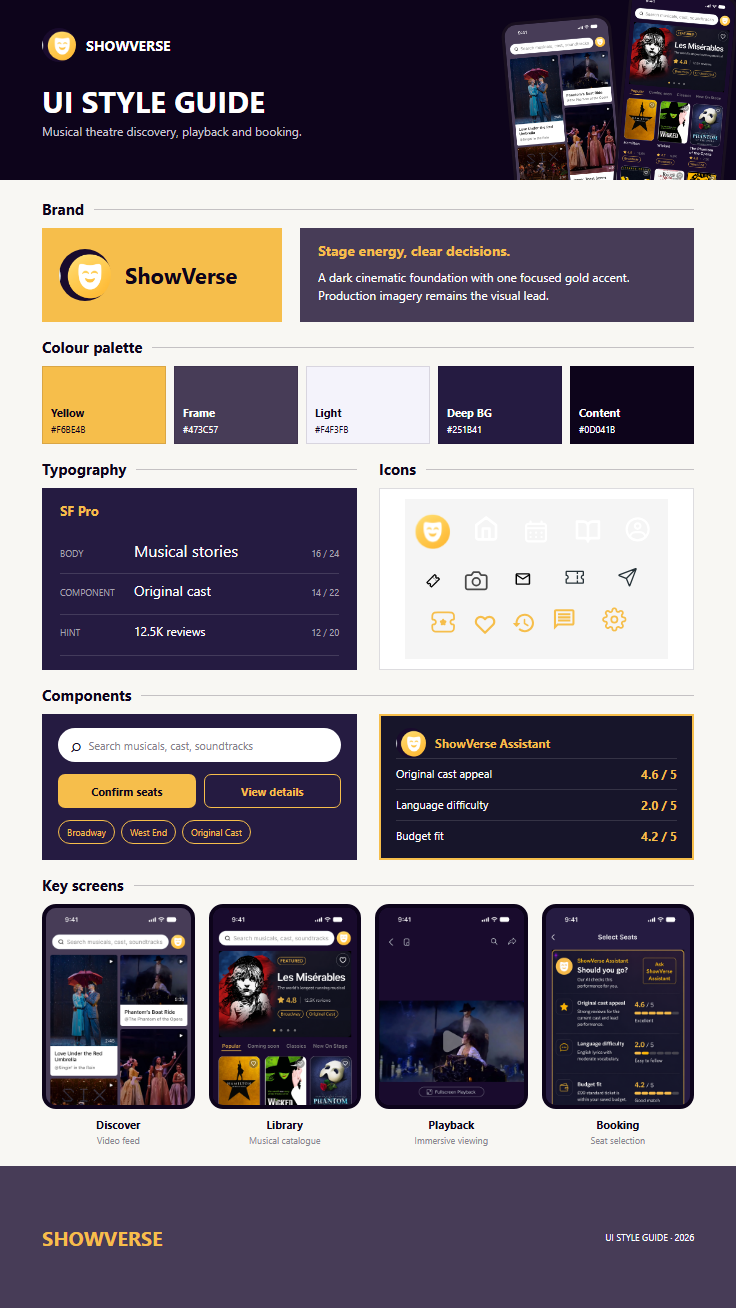
The moodboard refined into standardized rules — color, typography, graphics and components — the bridge from an abstract theatrical tone to consistent pages.
05 — FINAL DESIGN
Five flows, one continuous journey
FLOW 01 — INTEREST DISCOVERYA short-video feed of famous scenes lowers the entry threshold. @AI in the comments explains a scene's background; sharing a clip retrieves the full plot and cultural reading.
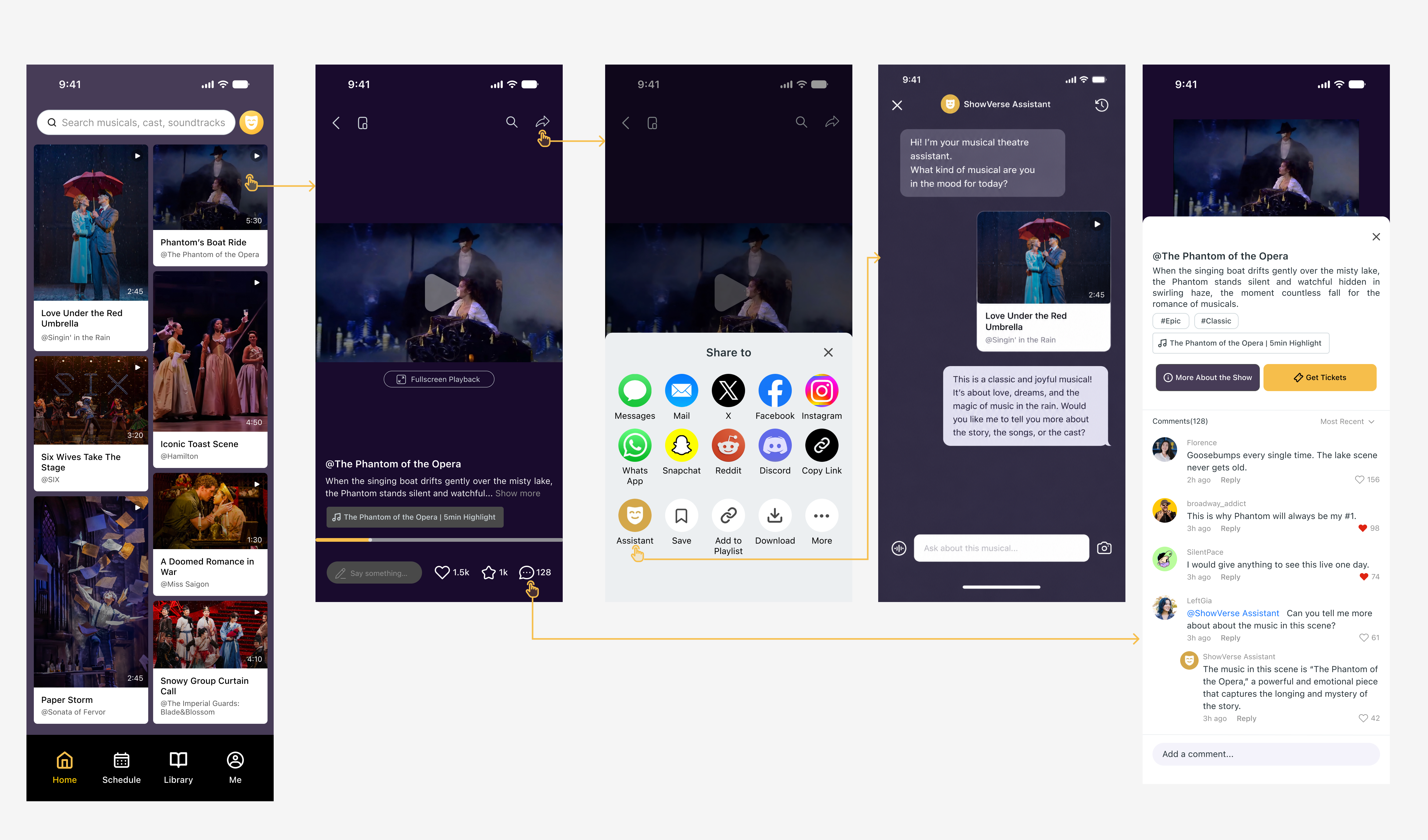
FLOWS 02 + 03 — UNDERSTAND & DECIDE, WITH AIAct-by-act interpretation, scene timelines and ratings answer "what to watch next". The AI companion takes city, budget, time and cast preferences in one message and returns bookable recommendations.
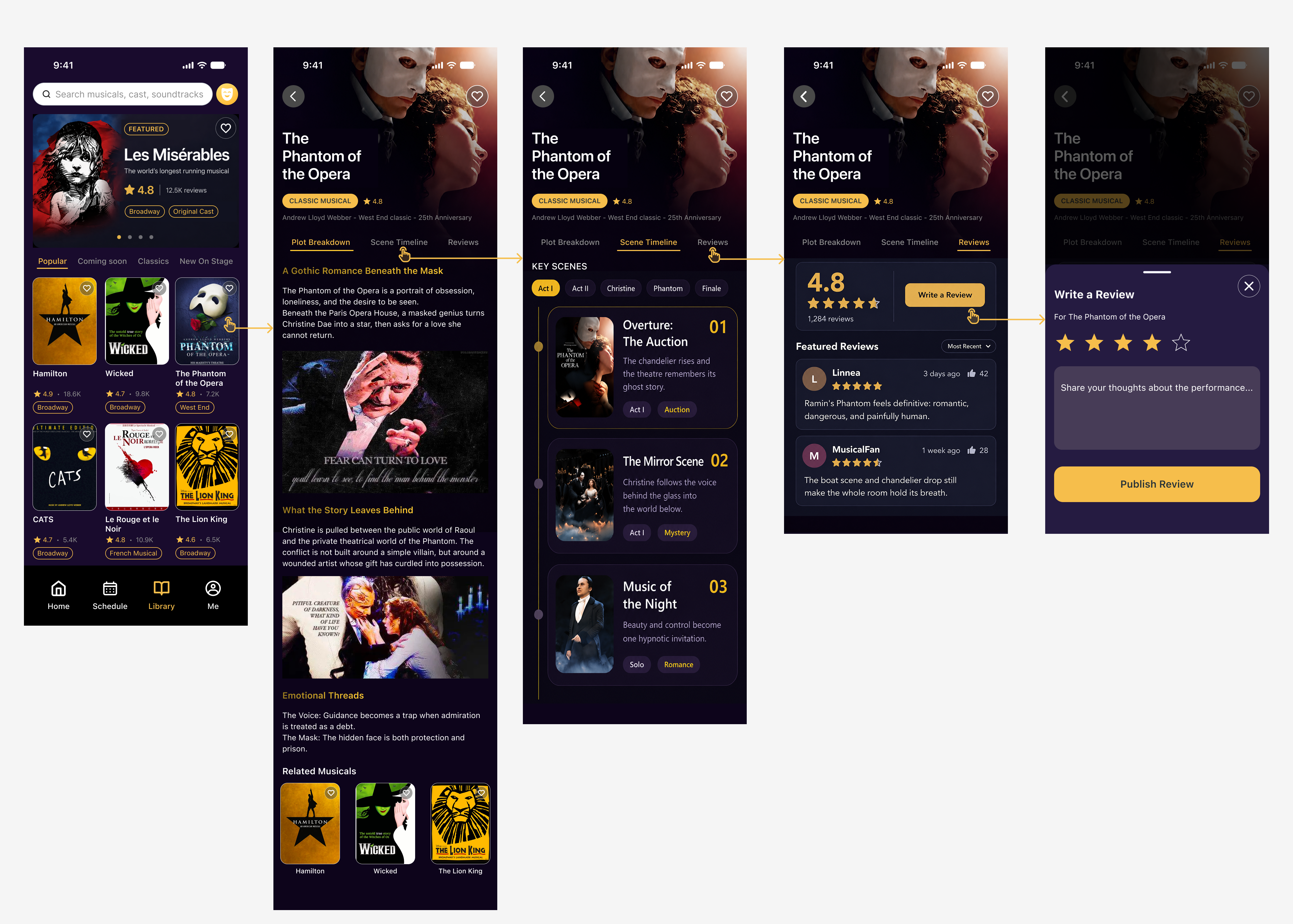
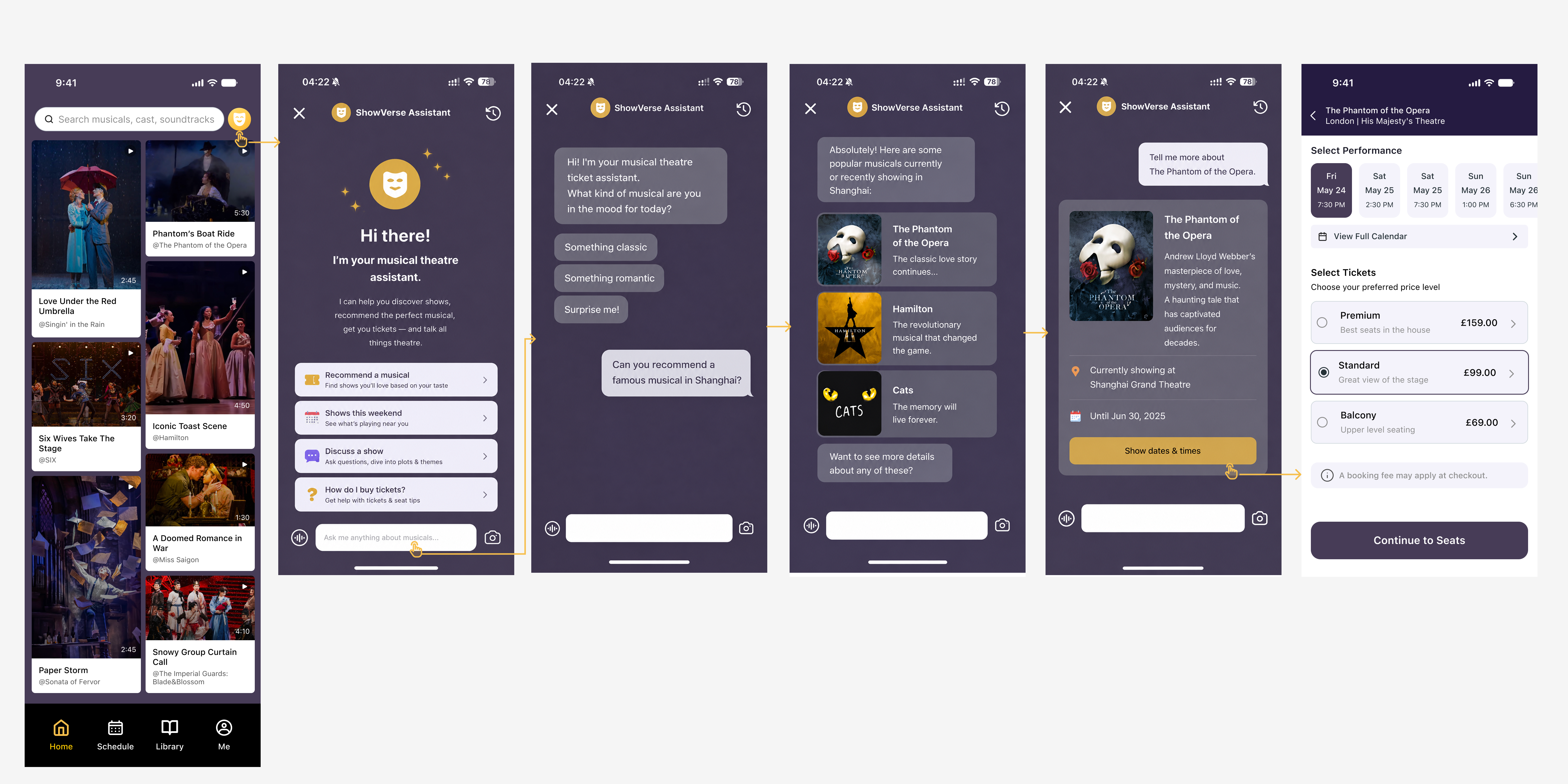
FLOW 04 — ATTENDING THE SHOWBefore purchase, an AI decision card analyzes the session — original cast, language difficulty, ticket value — and real seat photos show the actual view, easing price anxiety.
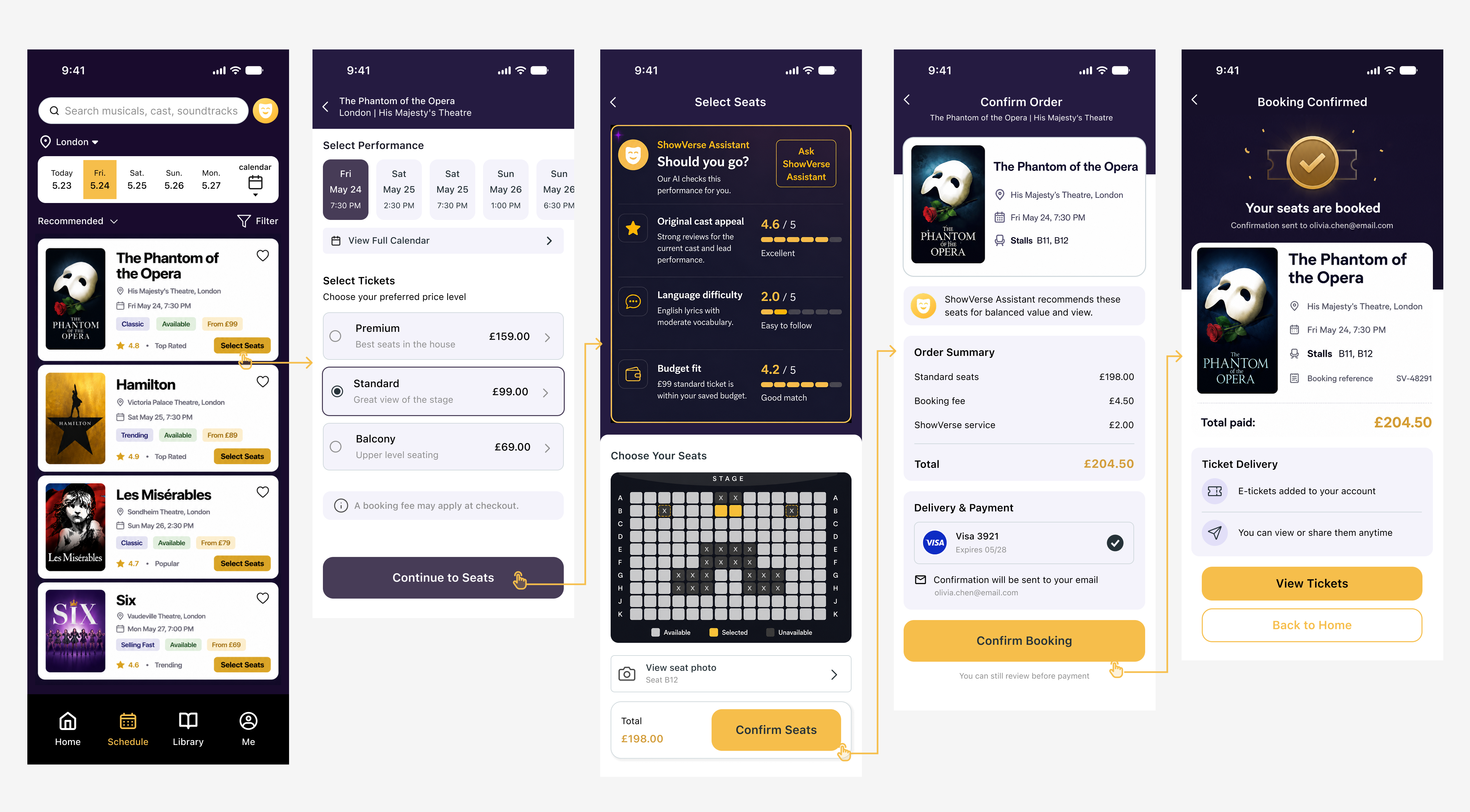
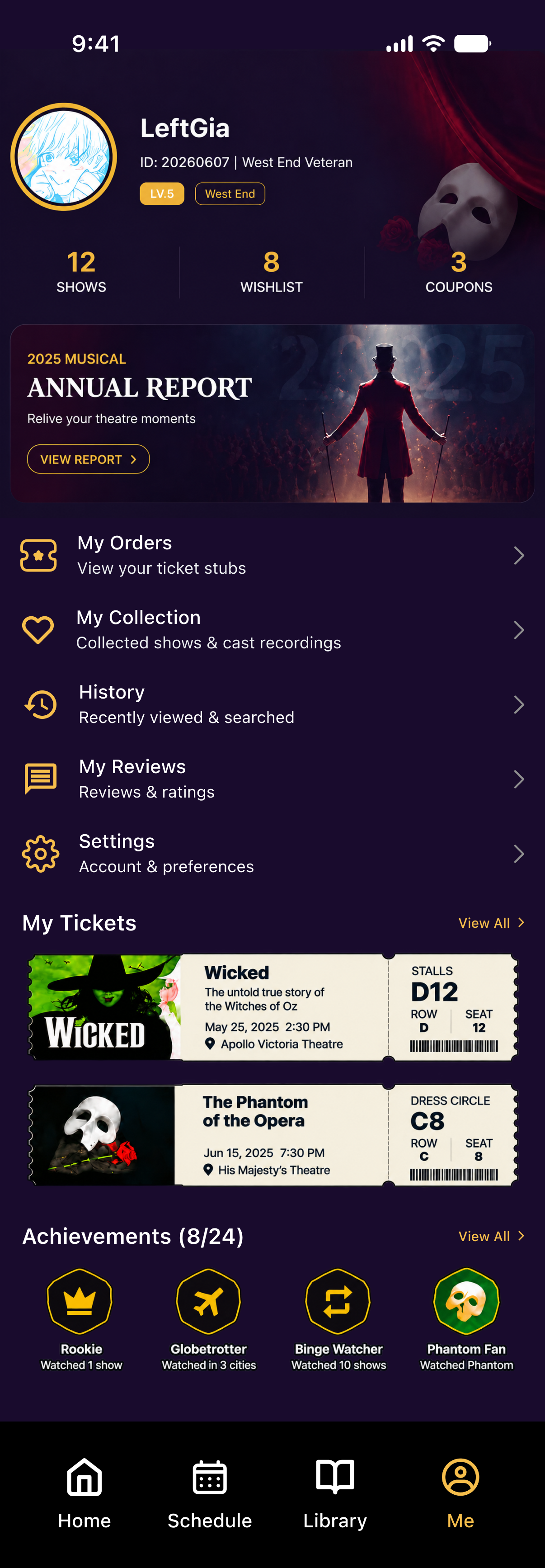
FLOW 05 — RETENTION & GROWTHEach ticket becomes a digital stub; attending unlocks achievement badges and an annual report — recording the path from online fan to live audience.
06 — SUMMARY
Subtraction is the strategy
01 — Real needs hide beneath surface behaviors. Layered quantitative and qualitative research overturned my own ticketing hypothesis.
02 — A good product is not a stack of features. Cutting merchandise, karaoke and tutorials kept the product on its core thread.
03 — AI is a design partner, not an answer. It accelerated concept exploration, while research and judgment made the calls.